Included Works
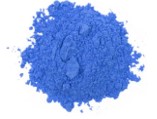
Egyptian Blue
Calcium Copper Silicate (CaCuSi4O10)
Ca. 3100 BC, Egypt
Egyptian Blue, or Calcium Copper Silicate, is the first synthetic pigment used in art. While unknown if its creation was an accident or intentional, scientists have been able to figure out its creation process. By heating together quartz sand, a copper compound, calcium carbonate, and a small amount of an alkali at temperatures between 800 and 1,000 °C for several hours, the product would be the light blue hue of Egyptian Blue. Commonly used to depict Pharaohs and gods, Egyptian Blue is currently being tested as a tint for glass.
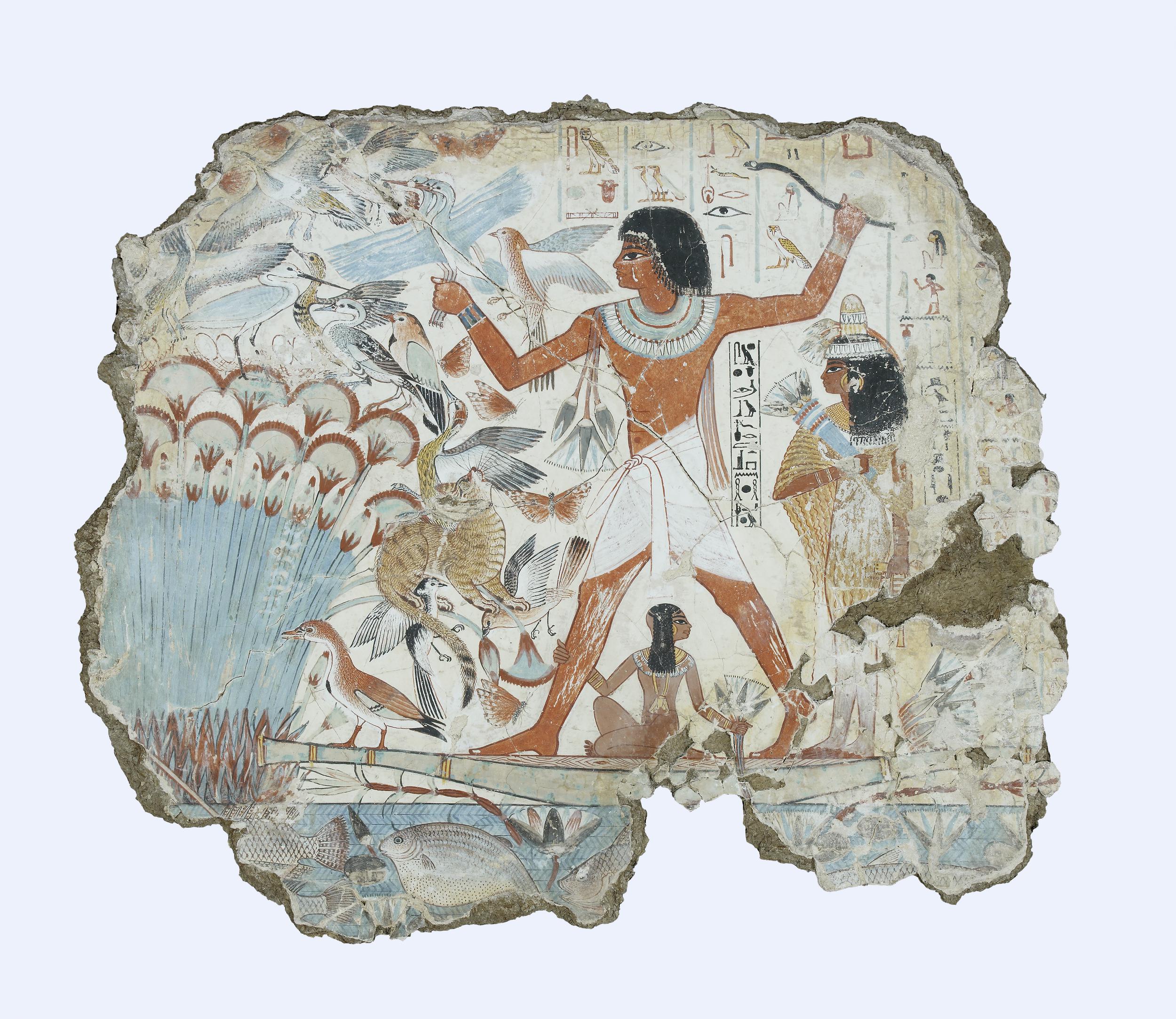
Hunting in the Marshes
Plaster and Paint
Egypt, Ca. 1350 BC
This work is a fragment of a polychrome tomb painting representing the Nebamun, a scribe working in the New Kingdom of Egypt, standing in a small boat. The light blue of the papyrus plants, the birds, the water, and the Nebamun’s necklace is painted with Egyptian Blue.
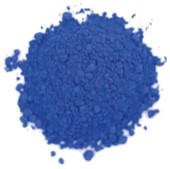
Han Blue
Barium Copper Silicate (BaCuSi4O10 )
Western Zhou Period (1045-771 BC)
Han Blue is a synthetic copper silicate pigment created and used in China between the Western Zhou period (1045-771 BC) and the Han Dynasty (ca 220 AD). Most notably used to color the Terracotta Warriors, the pigment was commonly used to color glass beads and ceramics, as well as appearing in wall art. It was created by firing a combination of barium mineral, quartz, copper mineral, and lead salt at a minimum of 1000 °C for 20-48 hours.
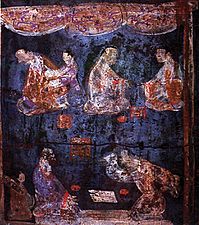
Detail of Mural Showing a Pair of Luibo Players
Paint on Stone
Eastern Zhou Period, China
This print is a detail of a mural from an Eastern Han tomb near Luoyang, China. It shows two figures playing Luibo, an ancient Chinese board game. Han Blue is used as the background color of the piece. The pigment is susceptible to deterioration, so examples of its use in painting can only be found in areas protected from the elements.
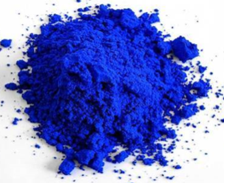
Prussian Blue Pigment
Fe4[Fe(CN)6]3
Johann Jacob Diesbach
Germany, 1706
Prussian Blue is considered the first modern synthetic pigment. It was created by accident by Johann Jacob Diesbach in Berlin around 1706. The pigment became an inexpensive alternative to Ultramarine Blue for modern artists. While most notable as the blue color of blueprints, the pigment was prominently used in 19th-century Aizuri-e Japanese woodblock prints. Along with its uses in painting, Prussian Blue is also an antidote for heavy metal poisoning absorbing radiation in the digestive tract before it can harm the body.
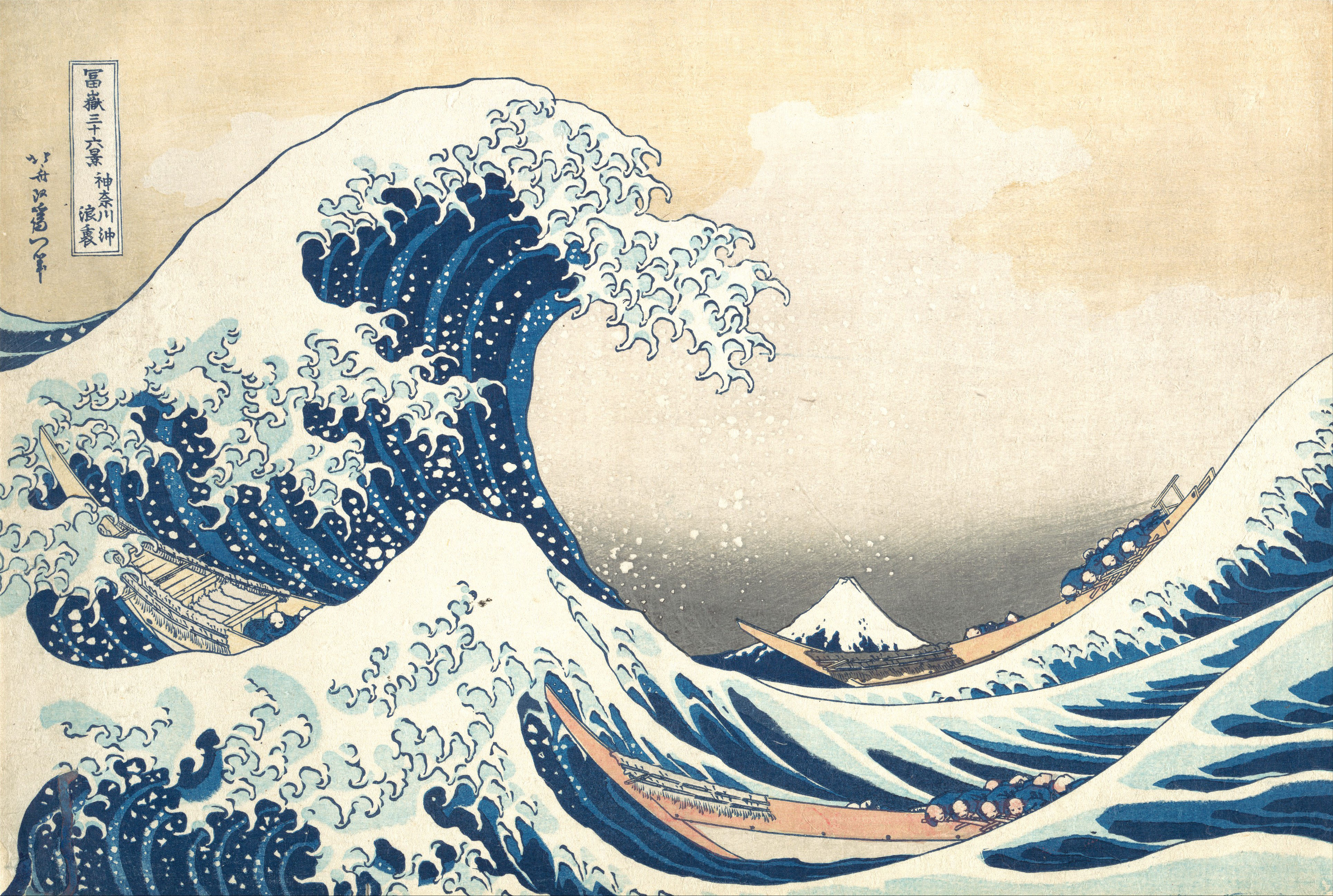
Under the Wave off Kanagawa (Kanagawa oki nami ura), also known as The Great Wave, from the series Thirty-six Views of Mount Fuji (Fugaku sanjūrokkei)
Katsushika Hokusai
Woodblock print; ink and color on paper/p>
ca. 1830-32
Under the Wave off Kanagawa shows Prussian Blue, in its most well-known use. The pigment is used to create the blue of the waves and the figure's clothing. White paint would be added to the color to lighten its shade.
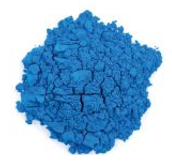
Cobalt Blue Pigment
Cobalt-aluminate (CoAl₂O₄)
Woodblock print; ink and color on paper
Jacques Louis Thenard, Paris
1803-04
Cobalt Blue sometimes referred to as Thenard’s Blue is a pigment created in 1803 by Jacques Louis Thenard. The color is the product of sintering cobalt oxide and aluminum oxide at 1200 °C. It was seen as an inexpensive alternative to ultramarine used among the impressionist and post-impressionists. The pigment is still used in art and a material used in rechargeable batteries. It can be toxic when mixing the pigment to create paint.
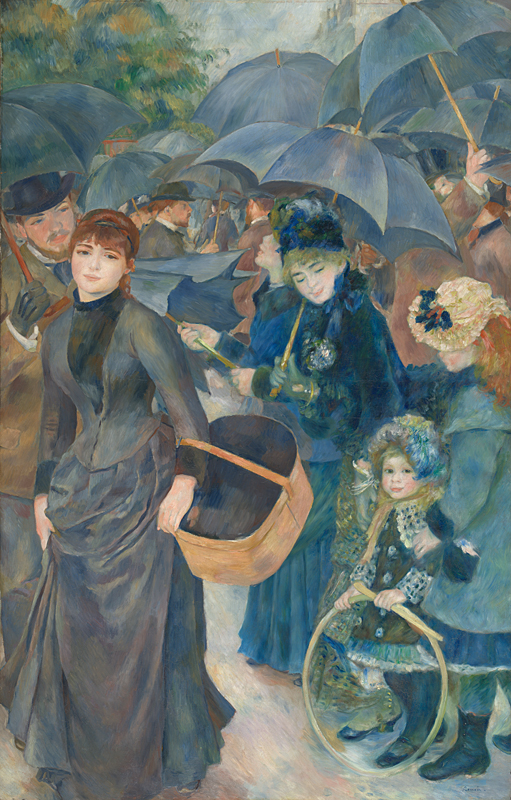
The Umbrellas
Pierre-Auguste Renoir
Oil on Canvas
Paris, 1881-86
In this Renoir painting, Cobal Blue can be seen in the dresses of the mother and daughter on the right side of the canvas. Cobalt comes in dark, medium, and light shades. The darkest variation in the mother’s coat, the medium shade in the umbrellas, and the lightest in the coat.
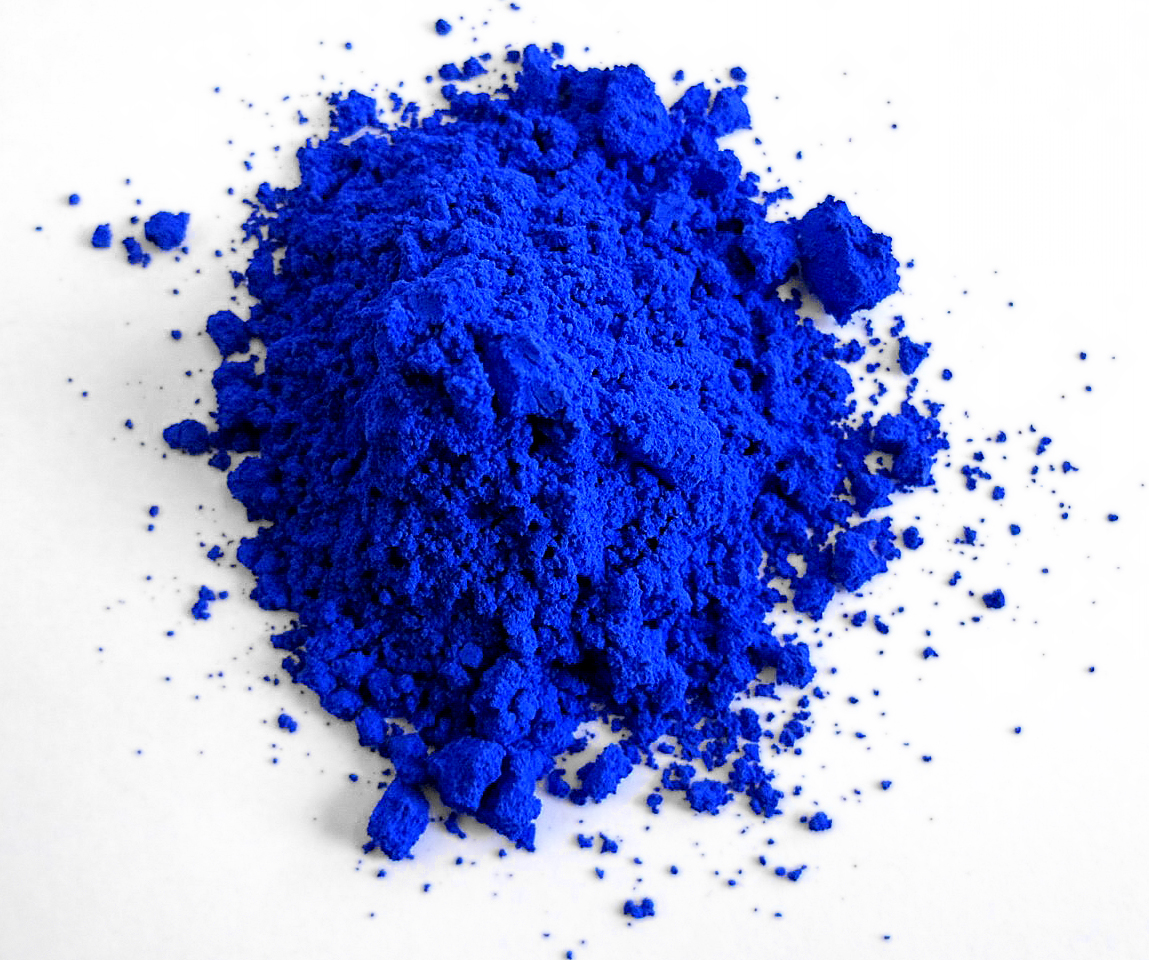
YinMn Blue
Mas Subramanian and Andrew E. Smith
About 200 years after the creation of Cobalt Blue, a Professor at Oregon State University, Mas Sabramanian, and his graduate student Andrew E. Smith accidentally created YinMn Blue. The name is derived from its chemical component’s yttrium, indium, and magnesium, but it is sometimes referred to as Oregon Blue. The pigment is non-toxic and safer to use than Cobalt Blue.