SET, COSTUME & LIGHTING DESIGN
Though each of the three major disciplines of production design—stage, lighting and costume—wouldn’t become recognized professions until the twentieth century, stage and lighting design have their roots in the Renaissance. The earliest mention of the small-scale set model, a three-dimensional prototype usually made of paper, appears in an early sixteenth-century treatise by Italian architect and painter Sebastiano Serlio, and account books from the English crown’s Revels Office indicate that the Italian practice had migrated to Elizabethan and Jacobean court theater.1 Some of the earliest surviving models from Philip James de Loutherbourg, dating to the late eighteenth century, show him using irregularly shaped flats placed in increments upstage to create the illusion of depth.2
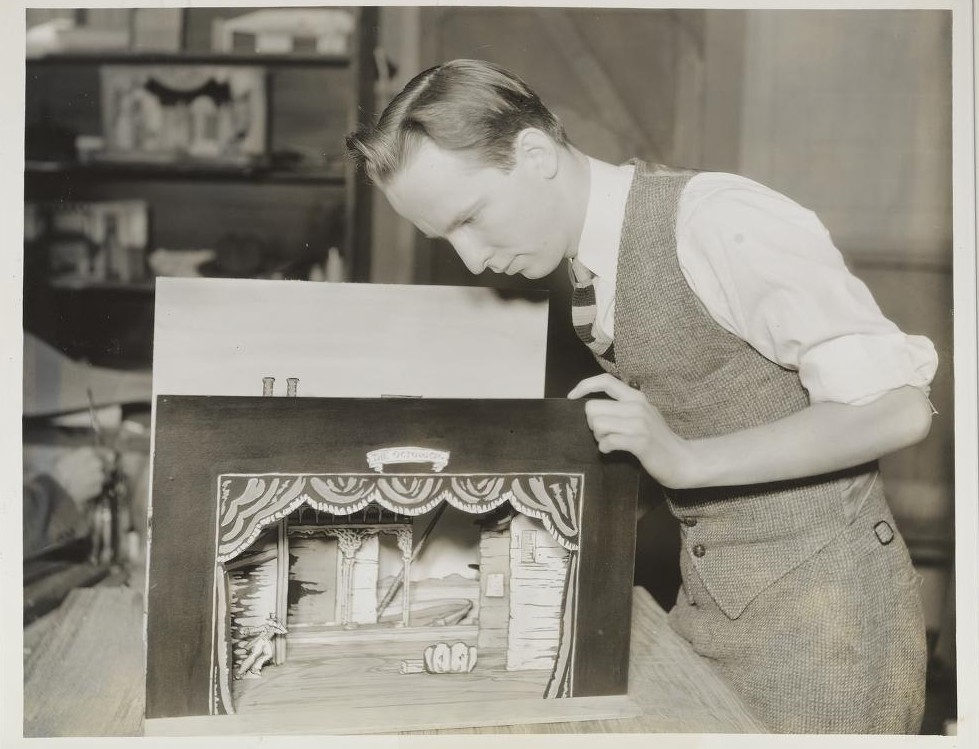
Image 17 of Miscellaneous Set Models, n.d. (ca. 1934-1943), Federal Theater Project Collection, Library of Congress
No known restrictions (works created by U.S. government employees generally not eligible for copyright protection)
Like Serlio before him and many set designers after, Loutherbourg was also a painter. However, because painting canvases for patrons was far more lucrative than painting backdrops for theater managers,3 the names of most scenic artists before the twentieth century have been lost, as they were primarily seen as craftspersons and technicians rather than artists in their own right. Instead of their names, they bequeathed the conventions which later generations of designers would have to work within (or against). The late eighteenth century witnessed the arrival of the box set, which replaced the layers of painted flats that had defined set construction with three connected walls which simulated a room.4 During the Victorian period, these box sets teemed with period-specific furnishings thanks to the era’s desire for what became known as “archaeological” realism. For some scenic artists, trips to the British Museum’s reading room were now part of the design process.6
The aesthetics of set design, as well as its professional identity, underwent a seismic shift at the start of the twentieth century. Inspired by the pared-down, Expressionist staging of Edward Gordon Craig and Adolphe Appia in Europe, a new generation of American artists brought highly individual aesthetic styles to scenic storytelling rather than defaulting to objective verisimilitude.7 Many practitioners of the “New Stagecraft” were in dialogue with contemporary art,8 and some of their ranks—such as Lee Simonson, James Reynolds, and Boris Aronson—started off as painters,9 making it unsurprising that painted sketches became an important part of production design. Thanks in part to the creation of the United Stage Artists union, chartered in 1918, the stage designer finally became recognized as an artist in their own right, billed above the cast list rather than “‘placed among the boot and hat makers.’”10 However, the lasting influence of this generation’s pared-down design is, in part, due to economics. In the face of diminished revenue and funding, the decision not to commission entirely new materials for a single production is an easy one to make,11 and though members of the New Stagecraft had worked across the fields of drama, musical theater, dance and opera, this practice became a financial necessity for later generations.12
The history of lighting design parallels the history of set design. The movement of theater indoors during the Renaissance created the need to figure out how to most effectively light the stage without compromising the comfort and safety of the audience. Many of the innovations resulting from these needs have persisted well into the electric era, even though the source of illumination has changed. Footlights, consisting of a row of lamps set within a trough along the stage apron, were first adopted in England in the 1670s.13 The chandeliers that hung above the house risked injuring spectators with dripping wax, but the arrival of gaslight in the 1810s removed that problem.14 And because gas lines could be run to a single control point, the chandelier could be dimmed and the intensity of lights behind the proscenium manipulated.15 Limelight—created by burning lime in front of a lens—started to be regularly used in 1860, resulting in the first spotlights.16 The electrification of theaters at the turn of the century allowed stage and house lights to be controlled from a central device that became increasingly compact as the twentieth century proceeded,17 and planning the lights could become part of creating a cohesive design vision. By the 1940s, lighting designers like Peggy Clark and Jean Rosenthal were receiving program credit.18
Improved lighting conditions warranted greater attention to stage design. It also necessitated a shift from the garish colors and coarse materials that had defined centuries of costuming. Read more about the history of costume design here.
NB: Costume materials are marked [C], scenic materials marked [S], and lighting materials marked [L]
General/Interdisciplinary
Harry Ransom Center, University of Texas at Austin
Costume and Scenic Design Collection, ca. 1800-1970 [bulk 1840-1950] (65 boxes) [C][S] [no published finding aid]W.H. Crain Costume and Scenic Design Collection, ca. 1650-1993 (38 boxes and 304 oversize folders) [C][S]
Norman Bel Geddes Theater and Industrial Design Papers, 1873-1964 [bulk 1914-1958] (design materials scattered across 688 boxes, 48 models) [S]
Edith Lutyens Bel Geddes Papers, 1901-2002 (design materials scattered across 46 boxes) [C]
Kevin Adams Papers, ca. 1980-2022 (34 boxes) [No published finding aid but container list available] [L]
Houghton Library, Harvard University
Horace Armistead costume and set designs, 1940-1969 (259 folders and 2 boxes) [C][S]Lewis Brown costume designs, 1964-1997 (20 boxes) [C]
Rare Book and Manuscript Library, Columbia University
Joseph Urban papers, 1893-1998 (approx. 33 boxes of design materials and 100+ set models) [S]Desmond Heeley papers, 1884-2018 [bulk 1946-2016] (12 boxes of design materials) [C][S]
Robert Wilson papers, 1969-2000 (322 boxes and 1 drawer; design materials scattered across collection) [S]
University of Bristol Theatre Collection
Julia Trevelyan Oman Archive, 1930-2003 (23 boxes) [S][C]Theater
New York Public Library, Library for the Performing Arts
Boris Aronson papers and designs, 1923-2000 (112 boxes and 24 set models) [S]Ben Edwards designs and papers, 1884-1999 [bulk 1938-1999] (approx. 30 boxes and 20 tubes) [S][C][L]
Patricia Zipprodt papers and designs, 1925-1999 (approx. 82 boxes of design materials) [C]
Willa Kim designs, 1905-2014 [bulk 1947-2014] (approx. 100 boxes and 10 tubes of design materials) [C]
Jeanne Button and MacDonald Eaton designs and papers, 1950-2015 (design materials scattered across 48 boxes) [C][S]
Martin Pakledinaz designs, 1981-2011 (101 boxes and 20.75 GB of digital files) [C]
Donald Oenslager papers and designs, 1922-1982 (24 boxes of design materials) [S][L]
Jo Mielziner designs and technical drawings, 1924-1976 (141 oversized boxes) [S][L]
Howard Bay designs and technical drawings, 1934-1985 (approx. 39 boxes) [S][L]
Tharon Musser designs and papers, 1945-2000 (design materials scattered across 90 boxes) [L]
Harry Ransom Center, University of Texas at Austin
B.J. Simmons & Co. Costume Design Records, 1830-1969 [bulk 1900-1960] (approx. 550 boxes) [C]Eldon Elder Papers and Models, 1950s-1980s (177 boxes)[No published finding aid] [S]
George Conway Design Collection, ca. 1910-1950 (28 boxes) [No published finding aid] [C]
James Newton Papers and Models, 1960s-1986 (50 boxes) [No published finding aid] [C][S]
Jed Mace Collection, 1875-1985 (56 boxes) [No published finding aid] [C][S]
Houghton Library, Harvard University
Max Reinhardt collection of costume and set designs, 1783-1934 [bulk 1902-1934] (2 boxes and 181 folders) [S][C]Jo Mielziner designs, 1924-1974 (17 drawers and 1 box) [S][C]
Robert Desmond Jones papers, 1910-1958 (7 linear feet, ca. 150 drawings and 5 boxes) [S][C]
Frederick Kiesler papers, 1920-1981 (25 boxes and 87 folders) [S]
Sally Jacobs papers, 1957-2016 (design materials scattered across 16 boxes) [S][C]
Robert Fletcher papers, ca. 1888-2015 [bulk 1950-2006] (design materials scattered across 174 boxes and 48 folders) [C][S]
Beinecke Library, Yale University
Frank Poole Bevan Papers, 1914-1971 (25 boxes of design materials) [C][S]Irene Sharaff Papers, 1934-2014 (49 boxes of design materials) [C]
Rare Book and Manuscript Library, Columbia University
Brander Matthews Dramatic Museum realia, 1700-1966 (30 set models) [S]Library of Congress
Peggy Clark papers, 1800-1997 [bulk 1936-1970] (approx. 415 boxes) [L][S]Victoria & Albert Museum
Sean Kenny, film and stage production designer, architect: theatrical work and designs, 1969-1973 (22 boxes and 24 oversize folders) [S]Oliver Messell Collection, ca. 1700-1978 (419 files) [C][S]
University of Bristol Theatre Collection
Mander & Mitchenson Collection [C][S]Dance
New York Public Library, Library for the Performing Arts
Joffrey Ballet Company records, 1877-2017 [bulk 1956-2009] (36 containers of lighting & stage designs and models) [L][S]Opera
Houghton Library, Harvard University
Leo Van Witsen designs and photographs, 1935-1973 (11.42 linear feet, 8 flat over-sized boxes)[C][2] Brejzek and Wallen, chapter 1, section 4.
[3] Michael R. Booth, Victorian Spectacular Theatre, 1850-1910 (Routledge, 1981), 9.
[4] Briant Hamor Lee, “The Origins of the Box Set in the Late 18th Century,” Theatre Survey 18:2 (1977): 46.
[5] Booth, 16.
[6] Booth, 23-24.
[7] Orville K. Larson, Scene Design in the American Theatre from 1915 to 1960 (University of Arkansas Press, 1989), 59-62.
[8] Larson, 59.
[9] Larson, 57 and 59 and Ronn Smith, “American Theatre Design Since 1945,” The Cambridge History of American Theatre, Volume III: Post-World War II to the 1990s, eds. Don B. Wilmeth and Christopher Bigsby (Cambridge University Press, 2008), 516.
[10] Larson, 73.
[11] Smith, 523.
[12] Smith, 525.
[13] Frederick Penzel, Theatre Lighting Before Electricity (Wesleyan University Press, 1978), chapter 2 (e-book).
[14] Penzel, chapter 6.
[15] Penzel, chapter 6.
[16] L.G. Applebee, “The Evolution of Stage Lighting,” Journal of the Royal Society of Arts 94: 4723 (August 2, 1946): 52.
[17] Applebee, 519.
[18] Applebee, 519.
[19] Booth, 25.